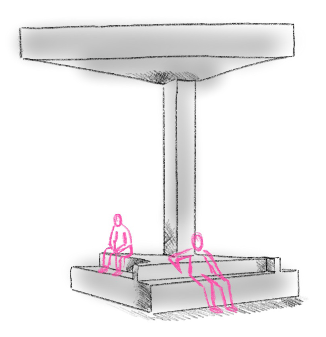
‘How should we redesign public seating to increase its use?’: a seven week, self-led research project into the impact of, and problems facing, public seating.
As the title implies, public seating does not meet the needs or desires of its users. This research project began the process of redesigning public seating so that it affords greater use by the individual (members of the public) and therefore subsequently enables interactions between users. The long-term goal of social cohesion is met with shorter-term goals such as introducing more suitable designs and eliminating hostile designs or the removal of this infrastructure entirely.
Target Audience: Researchers in the public seating field, as well as bench and urban designers alike
Duration: 7 weeks
Grade: Distinguished
Brief:
- Literature Review: Complete, synthesis, and discuss an interdisciplinary literature review
- Academic study: Carry out a mixed method research study, ensuring ethical considerations throughout. Document this research process and findings
- Product: Summarise research findings into a 5-minute video directed to a relevant professional audience
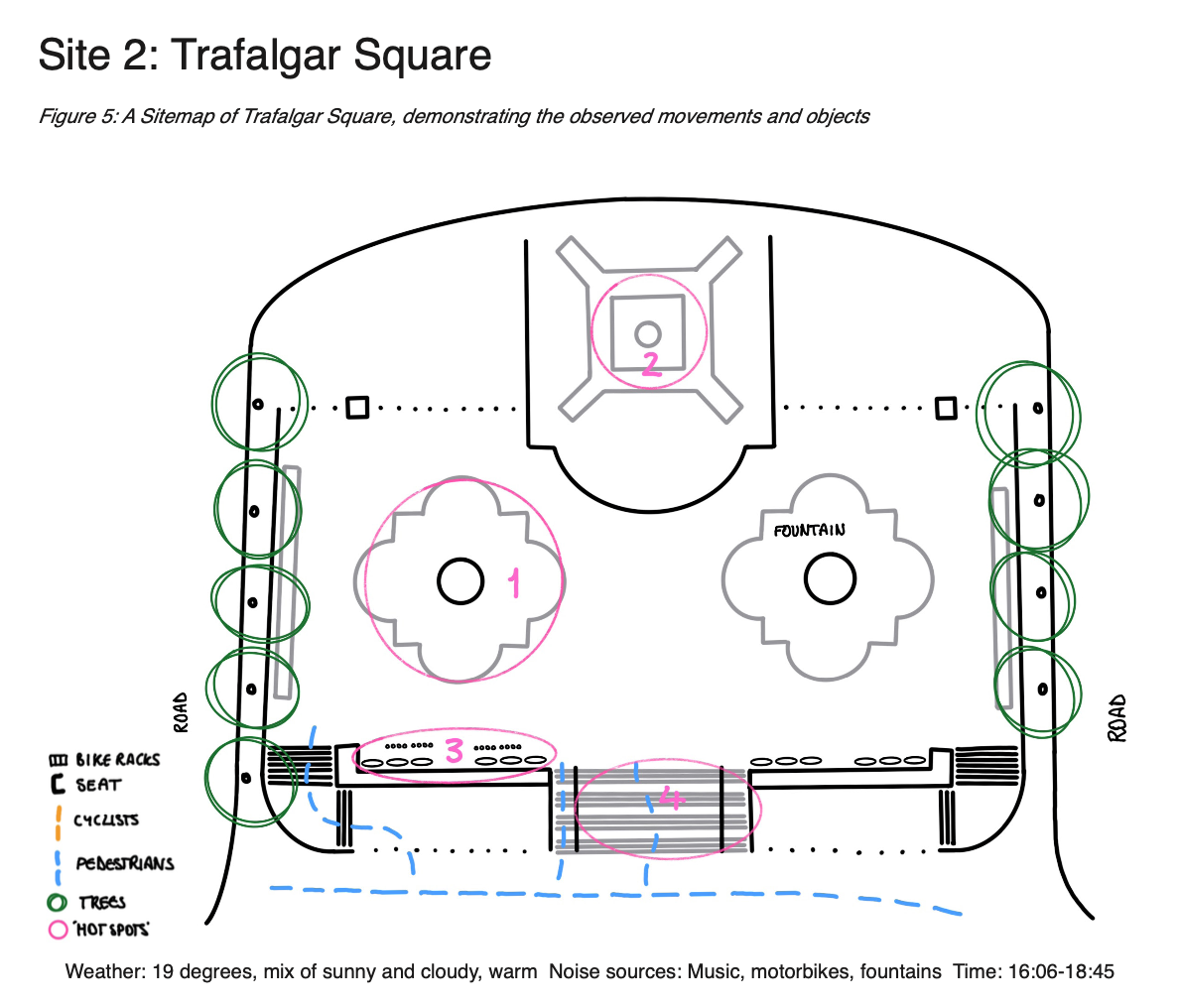
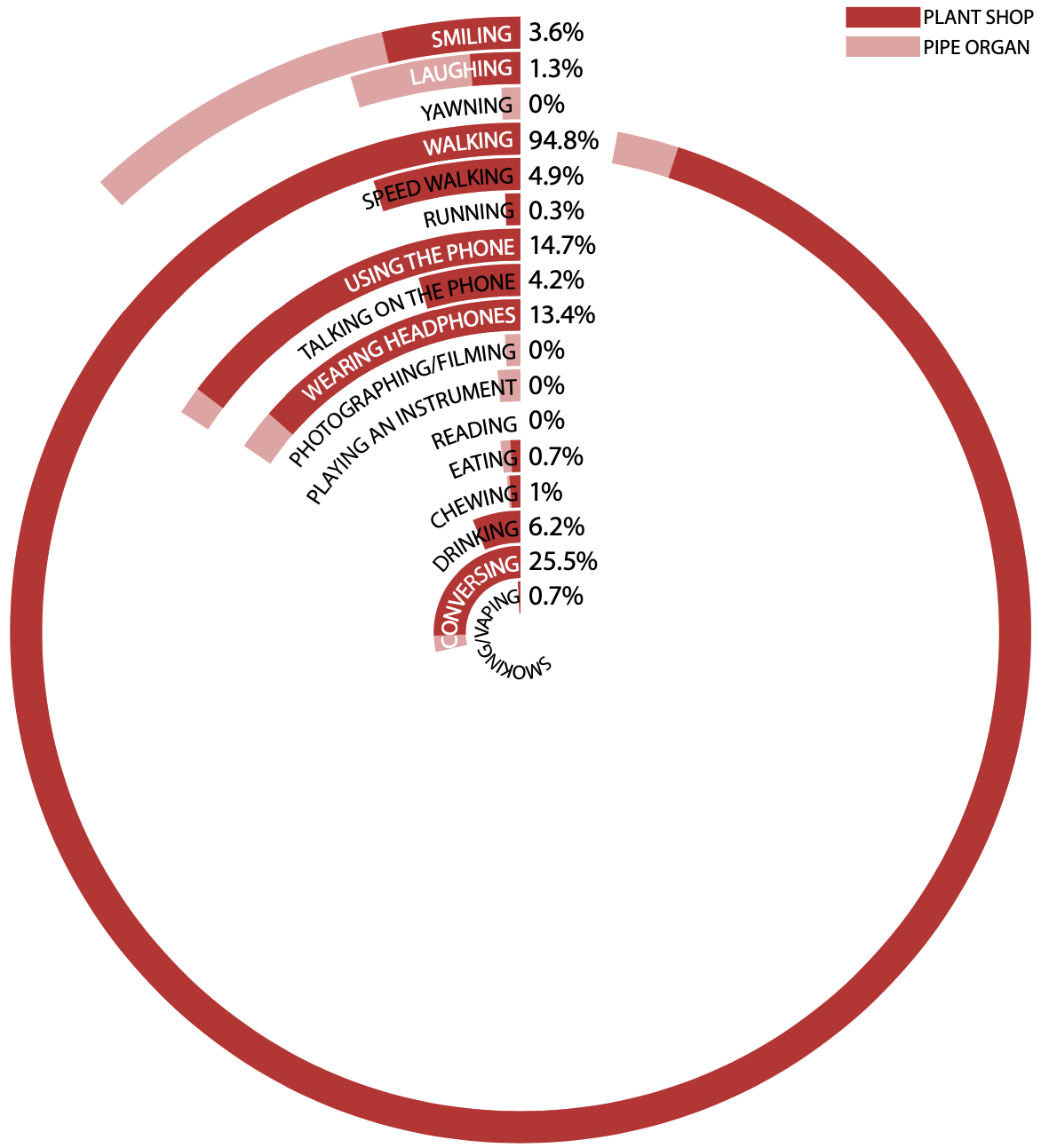
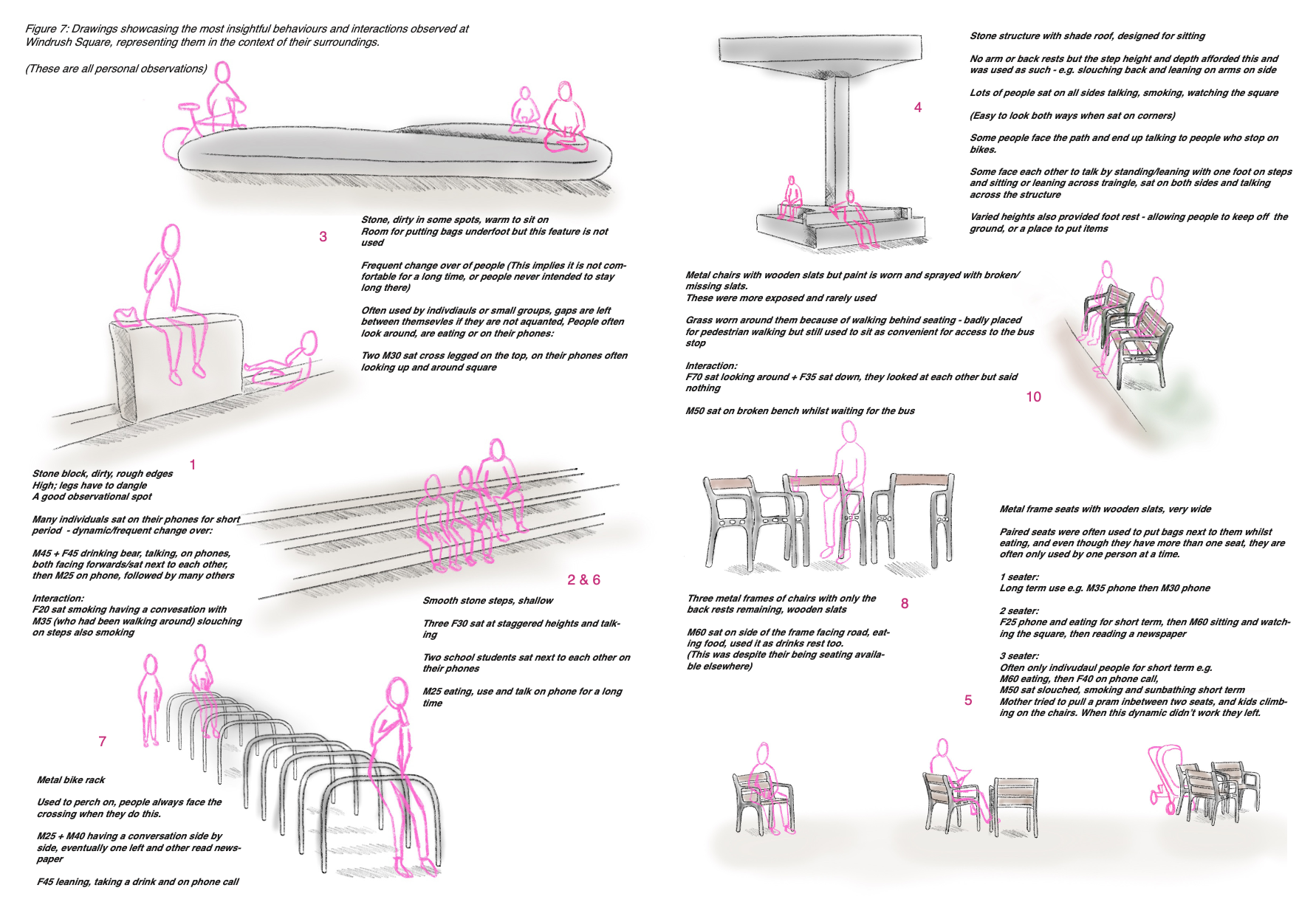
Stage 1: Explore – Using multiple Design Thinking and Social Research methods to explore the problem and empathise with key stakeholders (members of the public). This involved visiting three sites and mapping user behaviour in the context of the surrounding infrastructure. Interviews were conducted at every site to provide richer insight into likes, dislikes, and their root causes. Secondary research aided my understanding of other factors such as environmental impact and accessibility.
Stage 2: Define – Triangulating the data gathered from these methods to create user personas, identifying key problem areas and public needs. These informed a design brief.
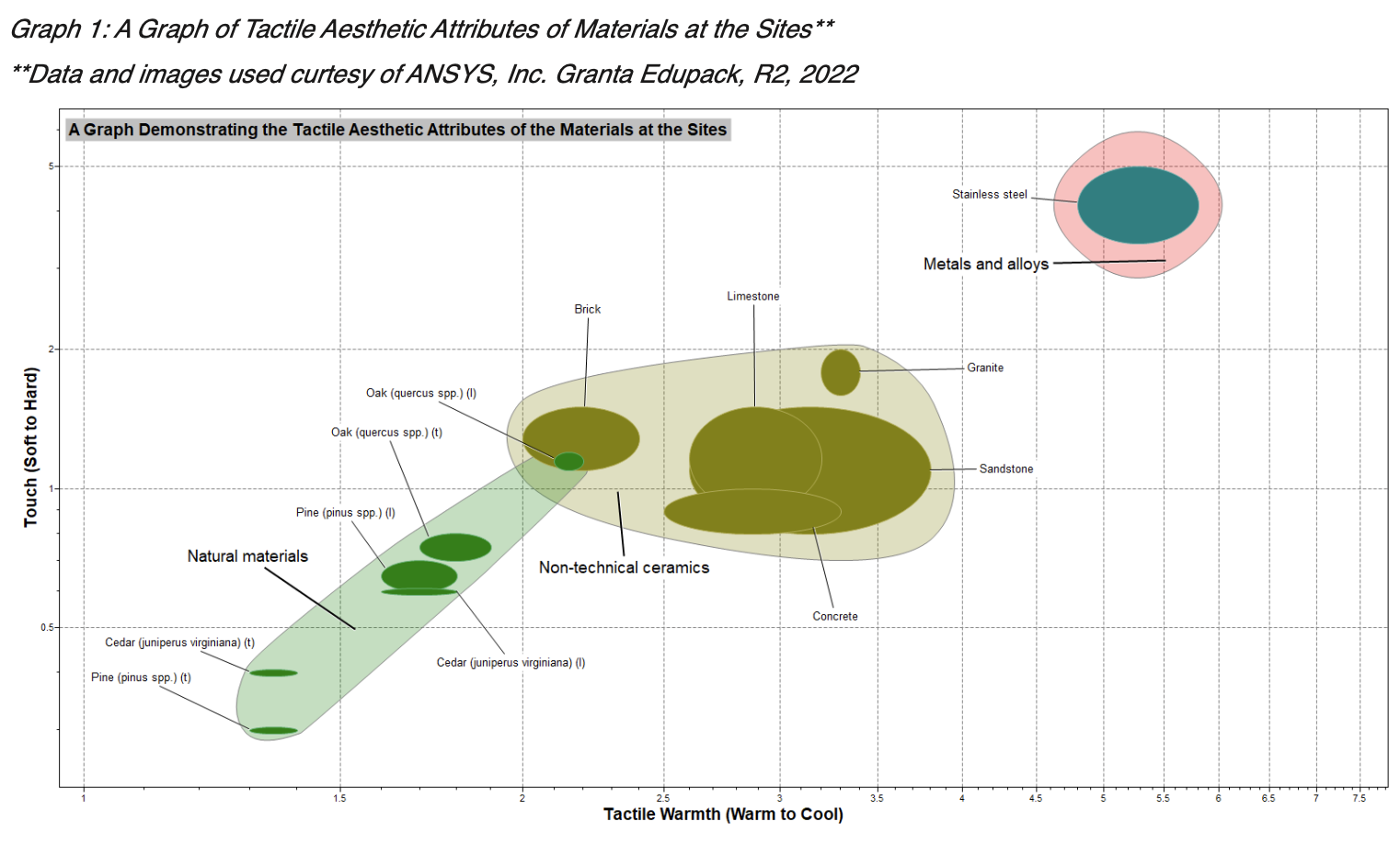
Stage 1.2: Explore – Using constraints from the design brief, he necessary material properties were identified.
Stage 2.2: Define – Data on these different properties from the Ansys Granta Edupack formed an analysis of suitable materials choices.
Stage 3: Ideate – Initial designs were conceptualised and would need developing before the
Stage 4: Test phase.
Skills Used:
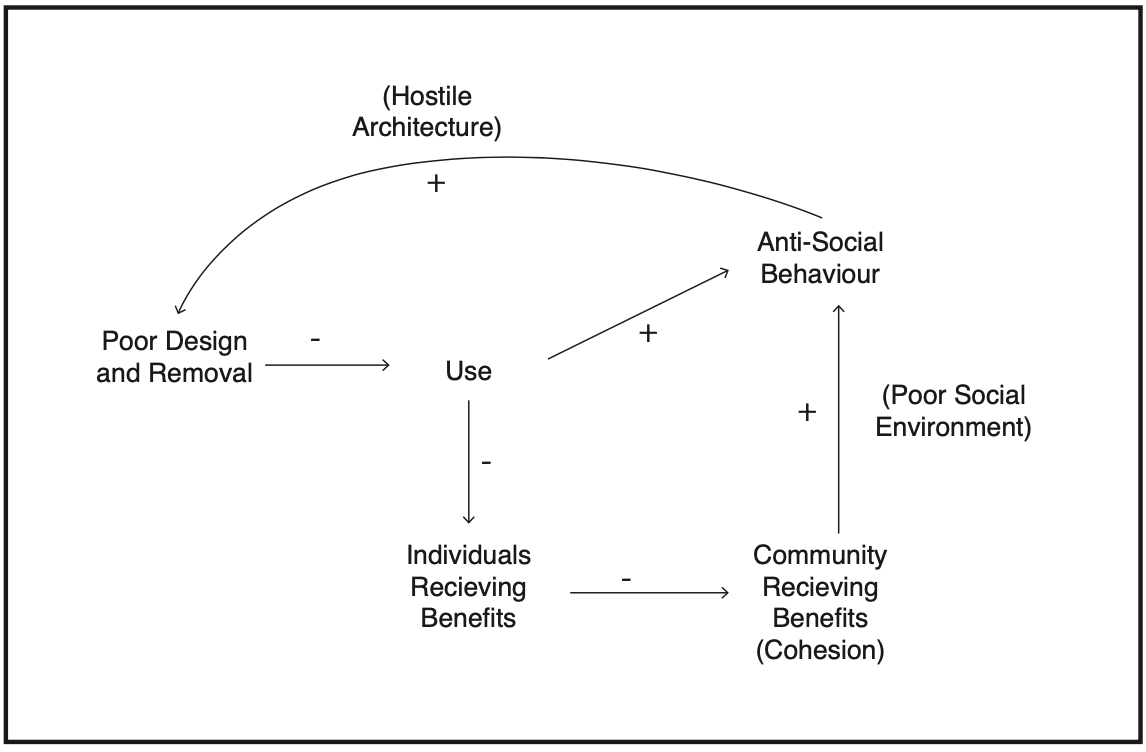
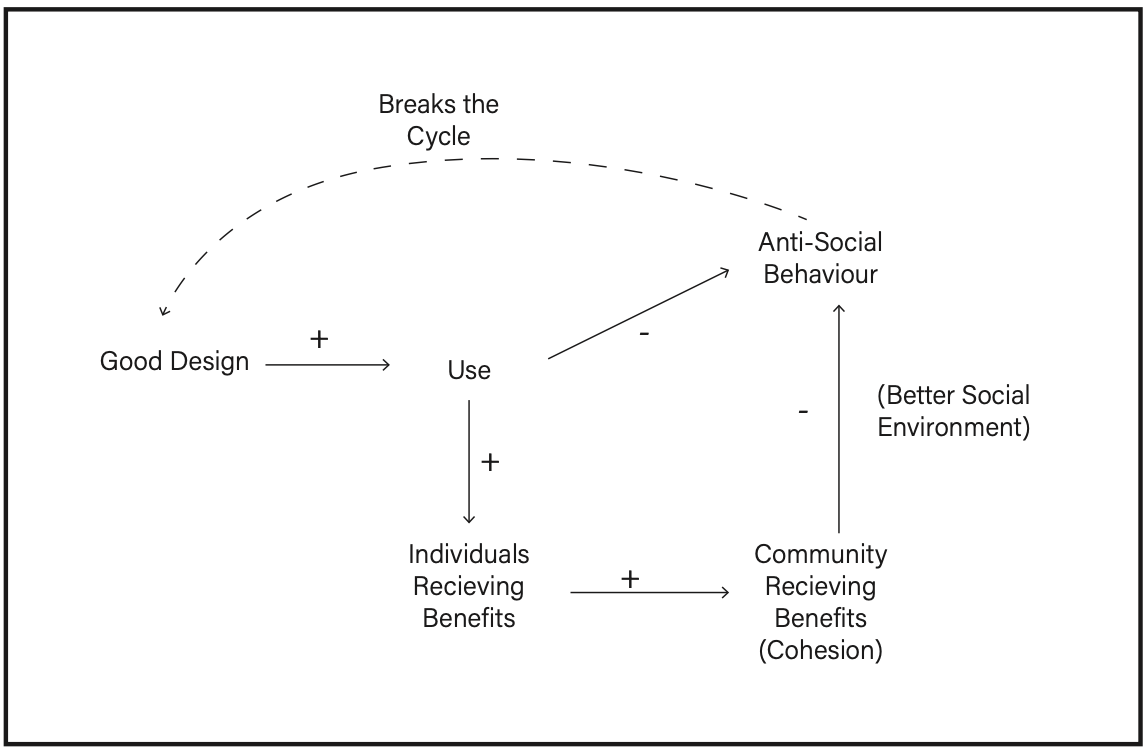
- Systems Mapping
- Design Thinking
- Public Interviews
- Participant Observation
- Secondary Research
- User Personas
- Ideation Sketching
- Material Analysis
- Illustration
- Video Creation
- Communication
- Literature Review
Outcome:
Through this research I found that people are not as influenced by the aesthetic quality of the public seating, compared to its practicality – and here there were more conflicts of interest than areas of consensus. The ideation and then testing stages require further development, but these initial insights lay the groundwork to inform the next stages. To conclude this research project, I produced a short video describing my findings visually from users perspectives. The video was addressed to other researchers in this field but also with the aim of providing insight and guidance for bench and urban designers alike; specifically it could benefit teams by adding to their information base, and illuminating areas that need addressing further.
Drag to see the systems map of the current problem before and after the intervention…